Unschooling
Unschooling is the homeschool method that has been the most difficult for me to define. For that reason, I was delighted when unschooler Sandra Dodd agreed to share her knowledge and experience. You can read the full transcript of my interview with Sandra below.
- How old are your children, and how long have you been homeschooling?
My kids each separately decided to stay home rather than start kindergarten at five; none of them went to school. Kirby is 23, Marty 20 and Holly will be 18 on November 2. (For those who read this later than the fall of 2009, they were born in 1986, 1989 and 1991.)
- Why did you decide to homeschool your children?
Kirby, my oldest, was four, and he didn't seem ready for group situations. He took an art class and a dance class, and he had enthusiasm that didn't fit in with the reality of the groups.
Through La Leche League and a playgroup, we knew four homeschooling families - two structured and two unschooling. When we decided to homeschool Kirby that first year, we knew we wanted to have the kinds of relationships with our children that the unschooled families had.
- What kind of relationships did you see in the families of unschoolers?
When parents and children can be partners rather than adversaries, communications will be flowing and open. In families with punishments, criticism and shaming, children sometimes avoid the parents in social situations, and they will hesitate to share secrets or problems with their parents.
In recent months I've been sick and hurt, and my children were very generous with their time and assistance. There was no eye-rolling or stalling. Because I've helped them so freely for so many years, they do the same naturally.
I've seen many unschooling families in which the children are close and kind with each other, when they're young and when they're grown, too. Since my oldest son's job moved him to another state, both his brother and sister have been to visit him, separately, with their own money. They wanted to do that.
- How would you define unschooling?
Even people who really want to understand unschooling have a hard time getting it. No one definition will cover all the angles, but recently I've been saying that unschooling is arranging for natural learning to thrive.
- How did you become interested in unschooling?
We were involved in attachment parenting, family bed and generally making our children happy and comfortable. I figured they'd go to school, but when we had a "free pass" to try unschooling, due to the laws in New Mexico and Kirby's late-summer birthday, we went into it as an experiment, knowing we could either put him in first grade or kindergarten the next year, depending on how it went. After a few months, though, we knew that he could do first grade at six, or he could just stay home if he wanted to.
- What does education look like in a family of unschoolers?
Life in a family of unschoolers looks like playing and talking and living and learning, but nothing like school.
- What type of families/students are well-suited to unschooling?
There are no "students" in unschooling. There are children.
When the parents are curious and can find joy in exploring and discussing common interesting things in the everyday world, unschooling can make a lot of sense very easily. Optimism and positive attitudes help. If the children's comfort and joy can be a high priority and the parents can see the value of letting even young children begin to make choices, by the time the kids are teens they'll have had a great deal of real-world experience in making thoughtful decisions.
- What type of families/students struggle with the unschool approach?
When a family is more concerned with obedience than with learning, sometimes they struggle mightily to achieve either, and the children are unhappy. If the parents love the idea of predicting and controlling and deciding what their children will know and do and be, unschooling will not be easy.
Unschooling is easy for children, once parents relax into it and come to understand it. It's a way of living with children in a life based on sharing a joyous exploration of the world.
- What is the role of textbooks and formal curriculum in an unschool environment?
Using a formal curriculum would negate unschooling. Some families might use textbooks as reference books, but there are better reference materials available. Textbooks are of very limited scope and range, as they're designed for one school-year's-worth of one grade, sometimes of a simplified reading level.
In some jurisdictions, families are required to submit a study plan, and I have a collection of such writings, from unschooling families in Ohio, California, New Zealand and Italy here, which can be adapted to other areas' requirements if a family feels the need.
- How does a parent teach without relying on textbooks and formal curriculum?
Unschooling is about learning, and not about teaching. Unschooling parents rely on their children's native, undamaged curiosity and on the interesting world around them.
- What is the role of grading and testing in an unschool environment?
Unschooling doesn't involve testing or grading. Some families living in states where tests are required just file the test scores without even looking at them. Some might look, but they don't work toward or in response to test scores. When unschooling works well and the parents are fully committed and involved, everyone in the family learns all the time, day and night. There's no failure. There's no "average." There's just learning.
- Without relying on tests and grades, how can parents make sure their children are learning?
They can tell because they're there with them every day. How did you know when your child could ride a bike? How did you know when they could swim? That's how you know when a child can read or count by fives or spell. They do it!
When they discuss current events with an understanding of geography and history, you know they've picked up that information, gradually and from all kinds of sources. It won't be in the same order kids at school or using a curriculum might learn it, but one reason that schooled kids can fail to learn something is that they have nothing to hook the new fact to. With natural learning, all learning is hooked into something the learner already knows.
- How do unschoolers make sure they aren't leaving any gaps in their children's education?
There is no single body of knowledge that can be learned gaplessly and then the person knows everything there is to know. No two people have the same body of knowledge, not even identical twins who were in school together their whole lives. No one can predict what any five year old will eventually need to know as an adult. The world is changing too quickly to plan ahead fifteen or twenty years with any reliability.
My children have the expectation that they will continue to learn their whole lives, so once "a gap" is noticed, it's filled in as they look at what it is they don't know, or they accept the lack and figure out how to live without it. I can't fix toilets; my husband can. I can sew; some people can't.
Many adults don't know how to explain how semi-colons should be used, but unless they're editors or proofreaders or English teachers, it doesn't matter. They could ask me, or someone else who understands it, if they ever need to know. I don't know the rules of cricket. I don't even know the rules of American football, but it doesn't matter. If I do need to know, I'll look it up in a book or on the internet, or I'll know which friends of mine could help me understand. The internet has many clear explanations of semi-colon use, too, in case that's "a gap" for anyone reading here.
- How do unschoolers make sure their children are prepared for college?
I've never heard of an unschooler doing poorly in college. Some of them start at community colleges to see if they like it and to get a feel for how it works. Others apply to alternative colleges. Some go straight into a regular university. Some go "early," or later, or don't go at all. One good way unschoolers can be "prepared for college" is to have an honest desire to be there, an undamaged sense of self, intact curiosity, and the ability to learn in all kinds of ways.
- How can unschoolers meet their state requirements for hours of instruction, subject areas and record keeping?
There are unschoolers in every state, and in all Canadian provinces, and in most of the rest of the English-speaking world. Few of those places have as much requirement for record keeping as curriculum salesmen would have people believe. All those jurisdictions also have alternative schools where parents pay to have their children in situations where traditional class time and methods are not used, where rather than grading there are contracts with the students to complete a certain amount of "work," or "authentic assessment" (observation and interview, informal discussion to discover whether the students understand subject matter).
When a state requires state history, rather than using a state history textbook, an unschooling family can visit museums and historic sites and read magazine accounts and historical diaries, but they probably have been doing that all along. And there are many families in school that move from one state to another and miss any state history at all, or who missed civics because one state taught it to 7th grade, and another to 8th and the family moved between times. (Or the child will get it twice.)
The state requirements exist in part to make schools interchangeable, so that if a child changes schools or districts, he'll still "get everything." All educators and most parents know it's not true even of two children in different classes at the same school. But the model is built on models of the industrial revolution: Henry Ford's assembly line. Eli Whitney and Oliver Winchester's interchangeable parts. In comparison, the education of each unschooler is individualized, one-of-a-kind, and self-perpetuating.
Unschoolers should find other unschoolers where they live for advice on how to live within the law. The curriculum link at #9 above will apply to this question, too.
- What advice do you have for parents who are intimidated by the idea of homeschooling without use of textbooks, formal curriculum, and a traditional scope and sequence?
Turn away from the school and look directly at your children. Look at them as individuals, rather than as students, or third graders or eight-year-olds. Look at their potential, their interests, their sweetness, and find ways to preserve and nurture those. If you don't think you can do it forever, try it for one year, and summers don't count.
A child who has "done schoolwork" for a school year has earned the vacation. But when "school year" comes back around, don't do school. Do life as though school didn't exist. Live to learn; learn to live. If after really trying it as hard and as honestly and fully as you can for an extended period of time you can't get it to work, then you can always go back to a curriculum.
School has already taken twelve or more years of your freedom and individuality. You don't have to let it take your adult life as well. You don't have to let it have your child.
School doesn't own learning. Textbooks, formal curriculum and a traditional scope and sequence are a small dot in a sea of life and learning. They have done more to "teach" children to avoid learning than anything else. Most of the adults around you are damaged in one way or another by their school years.
Here are some longer answers to similar questions, from when my children were in their middle-of-childhood years. Nothing changed for me after that except my convictions deepened, my theories were borne out, and my expectations were surpassed
- What if a child decides not to study math or grammar? How do parents make sure their children are obtaining all of the skills they will need for the future?
My children didn't "study" math or grammar, but they can all write well and are great at taking care of money and paying their bills. There is a misconception that unschooling involves kids "deciding to study" something, but they learn in little bits and bites all the time, and make their own connections.
Math is in music, art, architecture, and nature. Grammar is in song lyrics and rhymes, in puns and jokes, in understanding accents and dialects and collecting trivia on the history of English. My granny used to say "If I had my druthers." I figured out on my own that "druther" was a contraction of "I'd rather." I've always helped my kids see the base and history of words when I can. Sometimes Holly has puzzled one out that I'd missed my whole life.
I have written a great deal of how my children learned, and collected the accounts and suggestions of other families.
- What if my child just wants to watch TV or play video games all day?
Some days a parent doesn't want to do anything but nap or watch movies or sports. But when kids are excited to play video games, it's much more active and involved. They're learning and sharing, especially when it's an online video game, or a two-player game. Real life isn't divided into school hours and not, nor into 50 minute subject periods. With unschooling there aren't semesters or "grading periods" or school years. There is learning. And children can learn from TV and video games as well as from anything else. They can't make a choice unless they have a choice.
Obsessions and interests and hobbies can be the best ways to learn. There are stories about children's passions here.
Pam Sorooshian is an unschooling mom who teaches statistics at Cypress College in southern California, and she wrote something that applies not only to TV but to similar choice-making situations . It's called Economics of Restricting TV Watching of Children.
- Does unschooling have to be an all or nothing proposition? Can parents let the child lead in some areas, yet direct the child in others?
I have a great temptation to rephrase the question, as it doesn't invite a simple answer. "Child led" is not a phrase I personally use or like. Some people do, but it's usually people who aren't unschoolers. I'll respond to the second part first.
When a family really gets unschooling, there is learning happening in everything they do - in their discussions and their hobbies and in the things they do together as a family. If an unschooling environment is created and the family comes to live so that learning flows all the time, no one needs to lead. Everyone contributes to the flow with their questions and ideas and the things they find or show to others in the family.
If a family wants to unschool except for. (usually math or reading), they don't understand unschooling and it won't take full effect in their family. If a child is told that reading is more important than history and that the child isn't capable of learning to read, it devalues both history and the child's intelligence. If a child has learned to read in his own way and in his own time, he will know for the rest of his life, without question, that he can learn anything he wants to learn.
It's not an all or nothing situation, though. Learning to read happens in a home where others are reading, where parents read to children, where they can ask questions and get simple, helpful answers.
- How can families transition from more traditional methods of education to an unschooling approach?
Unschooling involves seeing the world in a different way. Sometimes formal homeschooling families do some deschooling, but when switching to unschooling, more and different deschooling is needed, especially for the parents who have been involved in school and teaching and defending schooling for probably 20 or 30 years. The kids will be ready to unschool before the parents, usually. It would help to be in contact with other unschoolers at playgroups or on the internet, and to meet unschooling families with children of various ages. It's difficult to imagine it, so it's easier to actually see it.
This new way of seeing the world involves seeing music in history, and science in geography, and art in math, and not talking about it. The last part is the hardest part.
I don't mean never talk about it. I mean don't say "Oooh, look! Science!" Once a person knows science is everywhere, and everything is connected to everything else, there will be nothing to talk about except the topic at hand, or where they're going or what they're seeing. The learning will happen without being labeled and sorted out. The labeling and sorting can prevent learning.
- How do unschooling parents measure success?
Happiness. Ease. Communications. Thoughtful decision-making. Compassion for others.
Sometimes there's bonus stuff, above "success" - jobs, college admission, the praise of others.
- What advice do you have for families who are new to homeschooling?
Don't spend money at first. Read, meet other families, let your children have time to do what they're interested in, or what they weren't allowed to do before because of school. If they want to read or play in the yard or ride bikes or watch movies or draw or paint or play games, make that possible for them.
While the children are recovering, the parents can learn about what they want to do and why, and how. There is more online about homeschooling than anyone could ever read. Find the writers and ideas that make sense to you, and pursue that. Don't rush into anything. Parents should learn to be calm and thoughtful instead of panicky and reactionary. It's better for health and decision-making, and it sets a good example for the children. Don't live in fear when you can live in joy.
For more information, visit Sandra Dodd's website www.sandradodd.com.
Claim Your Free Copy of
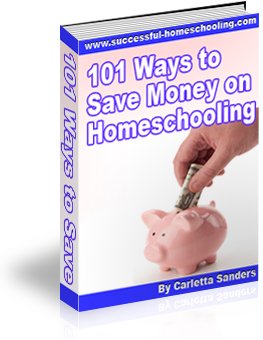
101 Ways to Save Money on Homeschooling!
Enter your name and e-mail address below to receive a FREE copy of 101 Ways to Save Money on Homeschooling!
You'll also join over 5,000 homeschoolers in receiving our free, monthly newsletter full of tips and ideas for Successful Homeschooling.
 |